
Upcycling
When so much love and time go into creating an ikat tapestry, no piece should go to waste.
Even not a tiny one.
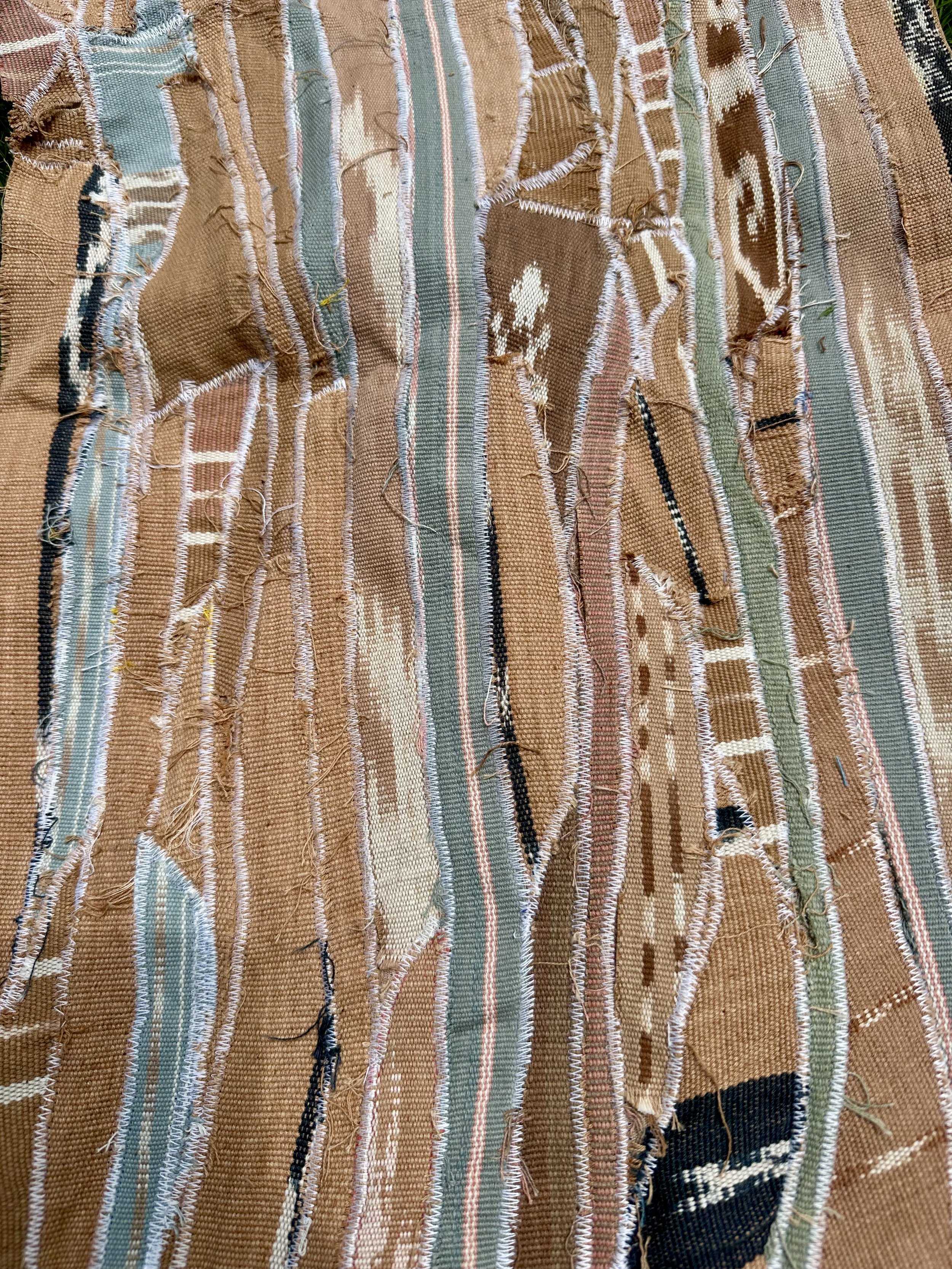
A process where materials and clothes that have been thrown away, or will be, are turned into more valuable products that fit the local environment, reducing the need to make new ones.


That’s why we’ve started a small sewing workshop with some of our talented weavers to repurpose scraps from our fashion and accessories pieces, ensuring that nothing ends up in a landfill.
What is upcycling?
How the hub works
Something we are still figuring out along the way.

The hub was born from a long-held vision by our founder, Asty Kulla, to repurpose the small pieces of ikat left over after cutting garments for our fashion and accessories. This idea perfectly aligned with Hester’s work and passion for sustainability. Together, they decided to take the leap in January 2025 and opened the hub near Letehakapuna village, collaborating with some of the community’s talented weavers.
The hub employs various patchwork techniques to breathe new life into offcuts, transforming them into contemporary designs. Additionally, by educating the women on sewing high-quality fashion pieces, the hub also serves as a workshop for producing small collections of garments and accessories, whether for Karaja or other local businesses.
The focus remains on repurposing existing materials through creative techniques such as redyeing, patchworking, and kintsugi, among others, showcasing how tradition and innovation can work hand in hand to create something truly unique.
Why upcycling
in Sumba?
-
As highlighted throughout our website, women in Sumba face significant inequalities on various levels. By providing them with opportunities to earn a livelihood, we help empower them to take a step closer to independence and self-sufficiency.
-
Between 100 and 150 billion garments are produced globally each year, a staggering number. Many of these garments are discarded within the first year, often ending up in countries in the Global South, where they contribute to environmental challenges. Through upcycling, we give new value to materials that would otherwise have been discarded in landfills, turning waste into something meaningful.
-
Job opportunities remain scarce on the island. By teaching our weavers additional skills and offering them opportunities to work in the upcycling hub between their weaving projects, we provide an extra source of income and diversify their skill sets.
-
Our hub is more than just a sewing workshop, it’s a space for creativity, experimentation, and growth. Here, we embrace trial and error, encouraging our team to repurpose leftover materials in innovative ways. Alongside these hands-on activities, we gradually share knowledge about the environmental and social impacts of the fashion industry. Hopefully inspiring hope for a fairer future for the industry.

From a linear to a circular system
Stepping away from take-make-waste.
